The EU Right to Repair Directive's Annex II Scope: What the Consumer-Facing Obligation Actually Requires
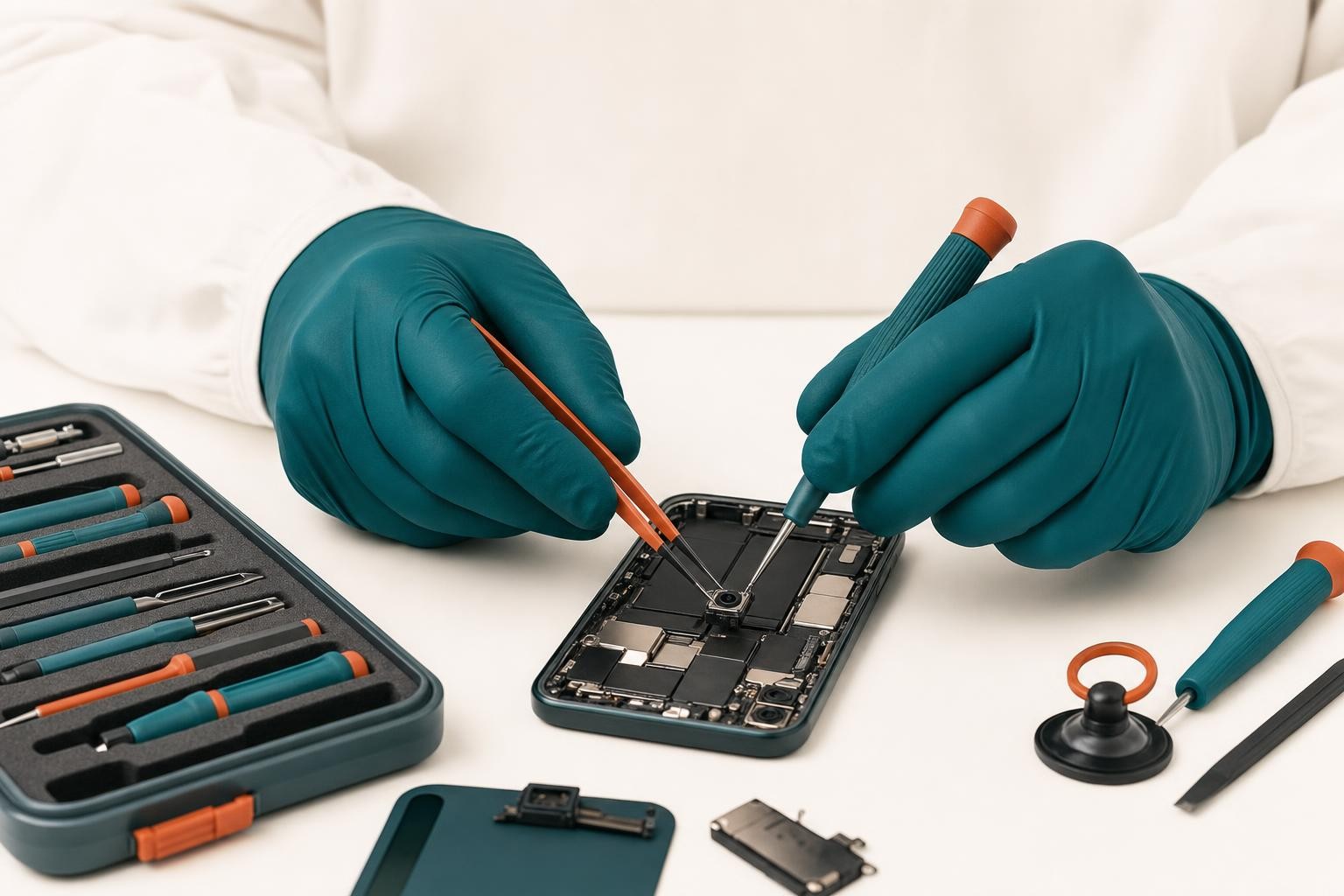
Your ESPR ecodesign compliance team has been working through spare-parts availability periods, disassembly requirements, and repairability scores. That work is real and necessary. But it does not, by itself, satisfy the obligation that landed on 31 July 2026.
Directive (EU) 2024/1799 on common rules promoting the repair of goods was adopted on 13 June 2024 and became applicable across all EU Member States on 31 July 2026. It creates something that ESPR's product-level rules do not: a direct, enforceable right for consumers to demand that a manufacturer actually performs a repair. Understanding where ESPR ends and the Directive begins is the first compliance task for product and legal teams at manufacturers of the named product categories.
The division of labor: ESPR sets the design rules; the Directive creates the repair obligation
The two instruments are deliberately complementary, not duplicative. ESPR (Regulation (EU) 2024/1781) and its predecessor implementing regulations require manufacturers to design products for repairability, make spare parts and tools available for defined minimum periods, and publish repair information for professional repairers. Those are supply-side, product-level obligations - they govern what a product must be capable of and what infrastructure must exist around it.
The Right to Repair Directive adds the demand-side layer. As the Directive's own recitals make clear, the obligation to repair "complements the supply-side related repairability requirements laid down in, for example, Regulation (EU) 2024/1781, encouraging consumer demand for repair." In plain terms: ESPR builds the infrastructure; the Directive gives consumers the legal lever to use it.

The structural consequence is important: the specific repairability requirements that define what spare parts must be available and for how long are set not in Directive 2024/1799 itself, but in the Ecodesign implementing regulations applicable to each product category. The Directive creates the repair obligation and the price and accessibility rules; the Ecodesign regulations define the underlying infrastructure that makes the obligation operable.
Which products are in scope at launch: Annex II explained
The repair obligation does not apply to all products. It applies only to products for which EU legislation already establishes reparability requirements - and Annex II of the Directive lists those products by cross-referencing the relevant Ecodesign implementing regulations.
At the 31 July 2026 application date, Annex II covers household washing machines and washer-dryers, household dishwashers, household refrigerating appliances, vacuum cleaners, electronic displays (including televisions and monitors), mobile phones, cordless phones and tablets, and servers and data storage products.
| Product Category | Underlying Ecodesign Regulation | Compliance Note |
|---|---|---|
| Washing machines & washer-dryers | Commission Regulation (EU) 2019/2023 | Spare part availability, disassembly, repair info obligations already active |
| Dishwashers | Commission Regulation (EU) 2019/2022 | Same framework as washing machines |
| Refrigerating appliances | Commission Regulation (EU) 2019/2019 | Fridges, freezers, wine storage for household use |
| Electronic displays | Commission Regulation (EU) 2019/2021 | Includes televisions and monitors; spare parts/tools availability period applies |
| Vacuum cleaners | Commission Regulation (EU) No 666/2013 | Listed in Annex II but underlying regulation has limited repairability requirements — monitor for updates |
| Mobile phones, cordless phones & tablets | Commission Regulation (EU) 2023/1669 | Spare parts availability period defined; repairability score methodology in development |
| Servers & data storage products | Commission Regulation (EU) 2019/424 | B2B-facing but repair obligation applies to consumer-placed products |
One nuance worth flagging on vacuum cleaners: Right to Repair Europe has noted that the Ecodesign regulation referenced in Annex II for vacuum cleaners does not currently include specific repairability requirements or a defined spare-parts list. The Annex II listing is real, but the practical scope of the repair obligation for that category depends on what the underlying regulation actually requires. Teams covering vacuum cleaners should monitor this closely.
The repair obligation applies to products placed on the market after 31 July 2026. Products sold to consumers before that date are not retroactively in scope — but manufacturers cannot refuse to repair an Annex II product solely on the grounds that it was sold before the application date, if the product is still within its spare-parts availability period under the relevant Ecodesign regulation.
What Article 5 actually requires manufacturers to do
The core obligations sit in Article 5 of the Directive. For compliance teams, they break into four operational areas:
1. Perform the repair Manufacturers of Annex II products must repair those products within a reasonable time and for a reasonable price when a consumer requests it. The Directive does not prescribe fixed turnaround times or price ceilings - those are expected to be shaped by Member State implementation and market practice. Repairs may be charged for; the obligation is not to repair for free, but to repair at a price that does not deter the consumer from choosing repair.
2. Publish indicative prices Manufacturers must ensure consumers can access, via a free-access website, information on the indicative prices charged for typical repairs of Annex II products. This is a separate obligation from the spare-parts pricing transparency already required under some Ecodesign regulations - it covers the repair service itself, not just the parts.
3. Do not impede repair - the anti-circumvention prohibition This is the obligation that catches many product and software teams off guard. Manufacturers must not use contractual clauses, hardware or software techniques that impede the repair of Annex II goods, unless justified by legitimate and objective factors including the protection of intellectual property rights under Union and national law. Manufacturers must also not impede the use of original or second-hand spare parts, compatible spare parts, or spare parts issued from 3D printing by independent repairers, provided those parts conform with applicable legal requirements.
The IP carve-out is real but narrow. It does not permit blanket software locks or warranty-voiding clauses that have no legitimate objective basis beyond protecting market share in the repair channel.
4. Do not refuse repair on the basis of prior third-party repair Manufacturers cannot refuse to repair an Annex II product for the sole reason that a previous repair was performed by another repairer or by the consumer themselves. This directly targets the practice of voiding manufacturer repair eligibility after any independent service.
Who holds the obligation when the manufacturer is outside the EU
The Directive follows the same chain-of-responsibility logic as ESPR. Where a manufacturer has no authorised representative in the EU, the importer performs the repair obligation. Where there is no importer, the distributor steps in. Each of these parties may sub-contract the actual repair work - but the legal obligation to ensure the repair is performed sits with the entity at the top of the available chain.
For non-EU manufacturers selling into the EU market, this makes the authorised representative structure a compliance-critical decision, not just an administrative formality.
How Annex II will grow: the ESPR pipeline
The ten categories in Annex II are not the final scope. Article 5(9) of the Directive gives the Commission the power to update Annex II by delegated act whenever new ecodesign or repairability requirements are adopted under EU law, and it must do so within 12 months of the relevant legal act being published.
The main expansion driver is ESPR itself. Categories already in the ESPR work plan - including textiles and apparel, furniture, laptops and other consumer electronics not yet in scope, tyres, and detergents - are candidates for future Annex II additions once their delegated acts include repairability requirements.
The practical compliance gap: from ESPR-ready to Directive-ready
A manufacturer who has done the ESPR groundwork - spare parts available, repair information published, disassembly requirements met - has built the infrastructure the Directive relies on. But several operational gaps typically remain:
- Repair-request intake process. The Directive requires manufacturers to respond to consumer repair requests. Most product teams have no documented process for this; it typically sits in customer service with no legal framework.
- Indicative price publication. Publishing repair prices on a freely accessible website is a new, standalone obligation. It is not satisfied by spare-parts pricing pages alone.
- Anti-circumvention audit. Software update policies, warranty terms, and service agreements need to be reviewed against the prohibition on impeding repair. Terms that void warranty coverage after third-party repair are a particular risk area.
- Distribution chain mapping. Confirming who holds the repair obligation - manufacturer, authorised representative, importer, or distributor - requires a clear chain-of-responsibility analysis for each market.
The key distinction to keep front of mind
ESPR compliance makes your product legally placeable on the EU market. Right to Repair Directive compliance determines what you are legally required to do after the product is in a consumer's hands. The two instruments are designed to work as a system - but they impose obligations on different teams, at different points in the product lifecycle, with different enforcement mechanisms.
For compliance and product teams at manufacturers of Annex II categories, the practical message is this: your ESPR work is the foundation, not the finish line. The Directive's consumer-facing obligations - repair intake, price transparency, anti-circumvention, and chain-of-responsibility clarity - require their own operational build, and that build needed to be in place by 31 July 2026.
Related reading

ESPR Performance Classes: The Ranking System That Makes Compliance Irrelevant to Competitiveness
ESPR's classes of performance rank compliant products against each other. A product can be fully lawful and still be publicly graded near the bottom of its category. Here's what that means for your product roadmap.
Who Sees What in a Digital Product Passport: Access Rights, Customs and Confidential Business Data
A passport is not a public web page. ESPR gives consumers, repairers, recyclers, authorities and customs different views of the data. Here is how role-based access works, what the pending security standards add, and how to protect trade secrets.
The ESPR Textiles Delegated Act: What the Draft Is Expected to Require from Apparel Brands
The textiles delegated act is the next big ESPR measure for fashion. Here is what the JRC preparatory work points to on durability, recyclability of mixed fibres and data points, the likely timeline, and how brands should prepare now.