The EU Omnibus Packages and ESPR: Which Simplification Track Actually Touches Your DPP Program
Ask a compliance team what "the Omnibus" changed for their Digital Product Passport program and you'll get three different answers, because there are three different things called Omnibus moving through Brussels at once. That confusion is costing product teams real planning time. Here's the actual record: what each package touches, what it doesn't, and why your ESPR deadlines are exactly where they were a year ago.
There isn't one Omnibus. There are several.
"Omnibus" is a legislative technique, not a single law - the Commission bundles amendments to several existing instruments into one proposal to move them through Parliament and Council together. Since early 2025 it has used that technique at least twice on very different parts of the EU rulebook, and the two tracks get confused constantly because they share a name.
Omnibus I is the corporate-sustainability-reporting simplification package. It entered into force on 18 March 2026, and it does one job: it cuts back the scope and data burden of the Corporate Sustainability Reporting Directive (CSRD) and the Corporate Sustainability Due Diligence Directive (CSDDD). Concretely, it raised the CSRD reporting threshold to companies with 1,000+ employees and €450 million turnover, cut the mandatory ESRS data points by roughly 70% (from about 1,073 to around 320), and narrowed CSDDD's scope to companies with 5,000+ employees and €1.5 billion turnover (passportcraft.com).
The Digital Omnibus is a separate proposal entirely, tabled by the Commission on 19 November 2025 as part of its digital-policy simplification agenda. According to the European Parliament's own Legislative Train tracker, its scope is GDPR amendments around AI and data-intensive research, a consolidation of data-law instruments into a single Data Act, modernised cookie-consent rules, and a single reporting point for cybersecurity and data incidents. It was referred jointly to the Industry, Research and Energy and the Civil Liberties, Justice and Home Affairs committees, went to the Council's Antici Group on Simplification on 21 November 2025, and the European Economic and Social Committee adopted its opinion on 18 March 2026 (europarl.europa.eu). Product regulation, ESPR and the Digital Product Passport do not appear in that proposal's scope.
What that means for your DPP obligations: nothing, so far
Read the two tracks together and the answer to "does Omnibus affect my ESPR program" is straightforward: no, not directly, not yet. ESPR and the DPP operate, in the words of one compliance tracker reviewing the record, on "a completely separate legal track" from both reporting simplification and the digital-policy package (passportcraft.com). Omnibus I's logic is scope and data-point reduction for company-level sustainability reporting - it doesn't touch product-level ecodesign or passport requirements, which apply based on what you place on the market, not how large your company is. The Digital Omnibus's logic is data protection, AI governance and incident reporting - a different policy family altogether.
The deadlines that were already fixed before either package existed remain fixed:
- The ban on destroying unsold textiles, clothing and footwear: in force since 19 July 2026
- The EU Battery Passport, under Regulation (EU) 2023/1542: 18 February 2027
- Textile Digital Product Passport compliance: indicatively late 2028 to 2029
None of these dates moved when Omnibus I entered into force, and none of them are named in the Digital Omnibus proposal's text as summarised by Parliament's own tracker.
The genuine open question: does simplification logic eventually reach ESPR too?
Where the picture gets more interesting - and where compliance advisors are starting to diverge - is what happens next. Some industry commentary already frames a further "Omnibus IV" as pointing the other way from Omnibus I: rather than cutting DPP requirements, it would entrench the passport as the default compliance and market-surveillance mechanism for product safety, effectively making DPP data harder to avoid rather than easier (passportcraft.com). That is a directional read from one advisory source, not a tabled legislative text, and it's worth treating it that way until a Commission proposal exists that names ESPR explicitly.
The more defensible read of the public record today is narrower: the Commission has now run two separate simplification exercises, one has finished (Omnibus I, in force), one is mid-process (Digital Omnibus, EESC opinion adopted, not yet through Parliament and Council), and neither has amended Regulation (EU) 2024/1781 or the delegated acts under it. If a future omnibus does turn to product-level ecodesign law, it would need its own proposal, its own impact assessment, and its own path through committee - the same road Omnibus I and the Digital Omnibus have each taken over 12-18 months.
What to actually do with this
For product and compliance teams, the practical takeaway is to stop budgeting uncertainty against your DPP program because of "the Omnibus" in the abstract, and start tracking the two tracks separately:
- If you report under CSRD or CSDDD, check whether Omnibus I's raised thresholds move you out of scope, or reduce your ESRS data-point burden - that's real, in force, and worth a scope re-check now.
- If you process personal data at scale or deploy AI systems, watch the Digital Omnibus as it moves through Parliament and Council - GDPR and AI Act amendments could land in 2027.
- If you're building toward the Battery Passport, the textile destruction ban, or a delegated-act deadline, treat those dates as unaffected by either package until a proposal that names ESPR explicitly reaches first reading. Nothing in the current record moves them.
The two Omnibus tracks are real simplification, and they're worth watching closely if you sit inside CSRD, CSDDD, GDPR or AI Act scope. They are not, today, an ESPR simplification package - and conflating the two is the fastest way to misallocate a compliance team's attention in the run-up to February 2027.
Related reading
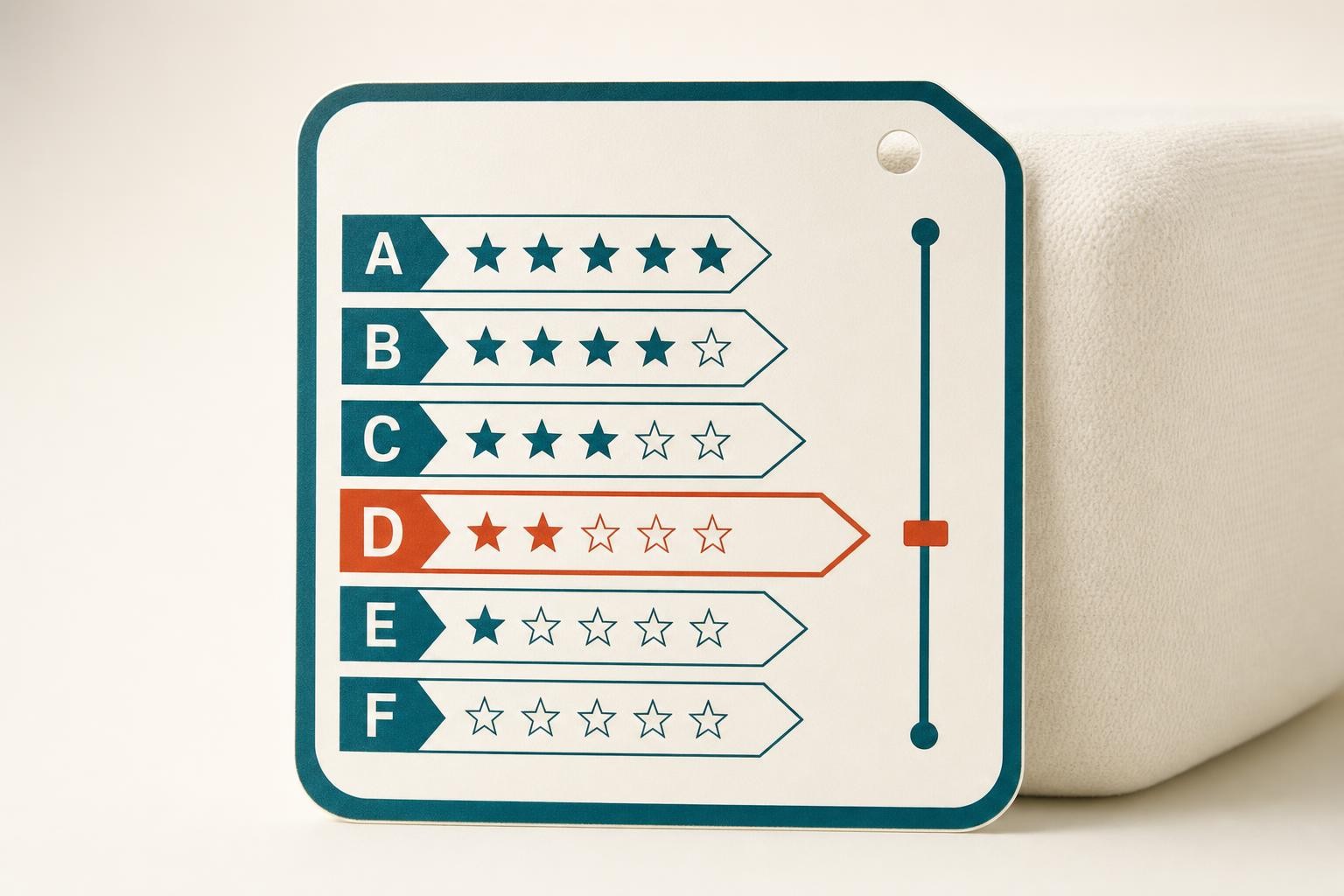
ESPR Performance Classes: The Ranking System That Makes Compliance Irrelevant to Competitiveness
ESPR's classes of performance rank compliant products against each other. A product can be fully lawful and still be publicly graded near the bottom of its category. Here's what that means for your product roadmap.
Who Sees What in a Digital Product Passport: Access Rights, Customs and Confidential Business Data
A passport is not a public web page. ESPR gives consumers, repairers, recyclers, authorities and customs different views of the data. Here is how role-based access works, what the pending security standards add, and how to protect trade secrets.
The ESPR Textiles Delegated Act: What the Draft Is Expected to Require from Apparel Brands
The textiles delegated act is the next big ESPR measure for fashion. Here is what the JRC preparatory work points to on durability, recyclability of mixed fibres and data points, the likely timeline, and how brands should prepare now.