The EU Central DPP Registry: What It Is, What It Does, and Why 19 July 2026 Matters
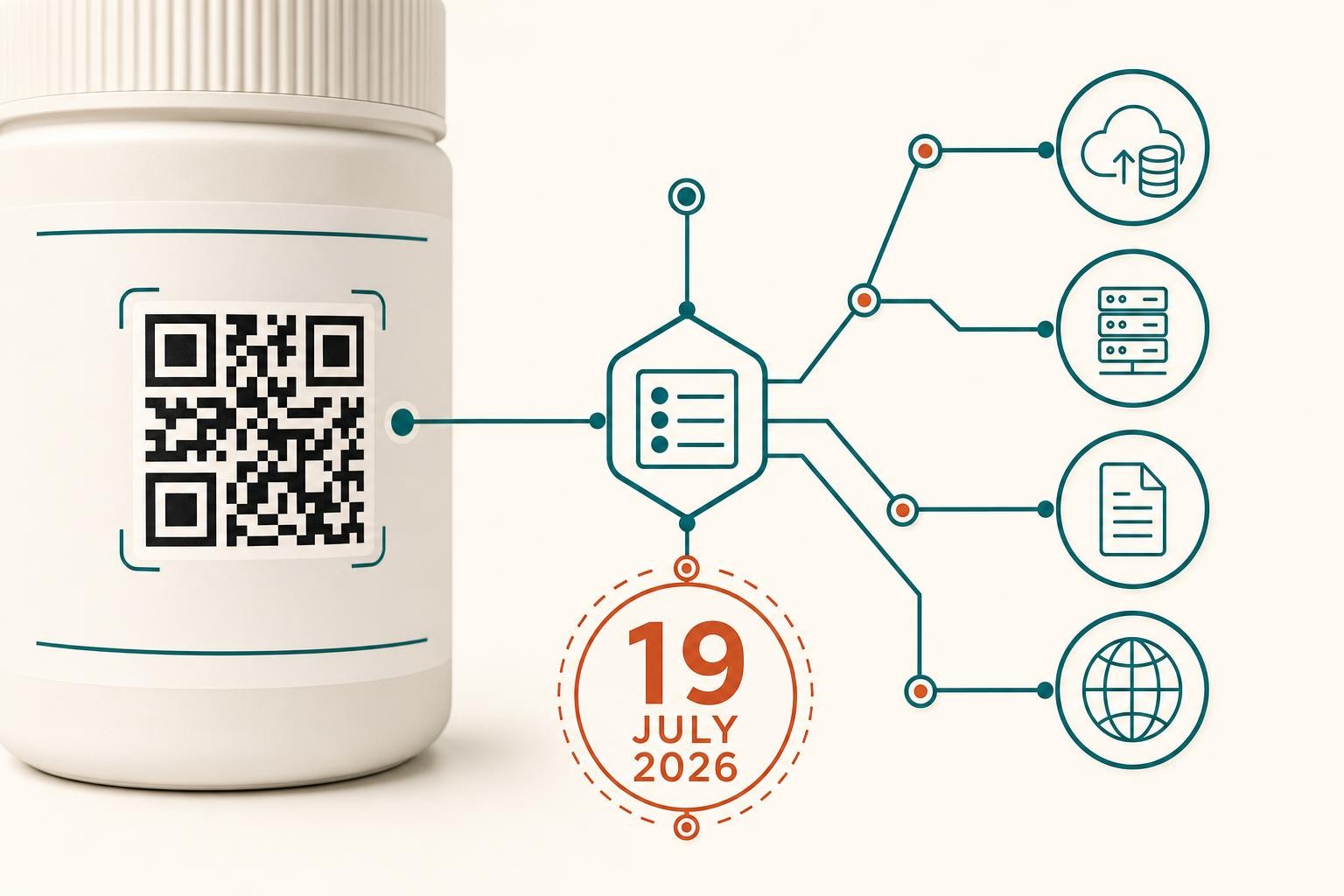
Most of the conversation about Digital Product Passports focuses on what data goes in them. Far less attention has been paid to the infrastructure that makes the whole system work: the EU Central DPP Registry. That changes on 19 July 2026, when the registry is required to be operational. Here is a precise account of what it is, what it does not do, and what the go-live date actually means for manufacturers, importers, and the platforms that serve them.
What the registry is - and what it is not
Under Article 13 of the Ecodesign for Sustainable Products Regulation (ESPR, Regulation (EU) 2024/1781), the European Commission must establish the EU Central DPP Registry by 19 July 2026. That legal obligation is unambiguous. What is less well understood is the registry's architecture.
The registry is a directory, not a data store.
The registry will not host passport data itself. Instead, it functions as a lookup directory: given a product identifier (via GS1 Digital Link), the registry returns the location of the product's DPP data, hosted by the manufacturer or their designated DPP platform. The actual passport content - material composition, recycled content, substances of concern, repairability scores - lives on infrastructure controlled by the economic operator or their chosen DPP service provider, not on Commission servers.
This decentralised design is deliberate. Aluminium manufacturers, textile brands, and battery producers all have fundamentally different data structures. A single centralised mega-database could not accommodate that diversity. The registry solves the discoverability problem without trying to solve the data-hosting problem.
Common misconception to correct: The registry does not 'store' your Digital Product Passport. It stores your Unique Product Identifier (UPI) and a pointer to where your passport data lives. Your DPP platform — or your own infrastructure — hosts the actual data. The registry is the index; you are the library.
What the registry does hold for each registered product is intentionally minimal: the unique product identifier (as encoded in the data carrier on the product), the GTIN or equivalent standardised product identifier, the URL where the passport data is hosted, the economic operator's EORI number, and metadata for authority access. That is enough to route any authorised lookup - customs officer, market surveillance authority, recycler - to the right data source.
How registration works
The registration process is API-driven. According to the Commission's preliminary technical specifications, manufacturers (or their platforms) register each passport via a RESTful API, submitting the GS1 Digital Link URI, the product category, and the URL where the passport data is hosted.
Before any registration can happen, the economic operator must complete an identity verification step. Each economic operator is identified via their EORI (Economic Operators Registration and Identification) number, ensuring traceability to the responsible entity. Non-EU manufacturers must obtain a qualified electronic seal - for legal entities - or a qualified electronic signature - for sole traders - from a qualified trust service provider under the eIDAS Regulation, and use it to complete verification in the registry.
Access to the registry is tiered once operational:
- Economic operators have write access to register and update their own product identifiers.
- Market surveillance authorities and customs authorities have read access across all entries.
- Public access may be provided for basic lookups - confirming that a DPP exists for a given product - but detailed registry data will be restricted to authorised users.
The registry targets 99.5% availability, with passport data hosts expected to maintain similar SLAs. That uptime requirement flows downstream: if your DPP platform hosts your passport data, its infrastructure must be capable of meeting it.
In practice, most manufacturers will not interact with the registry API directly. Your DPP platform handles registration automatically when you publish a passport - but you need to ensure that your platform supports registry integration and that your passport data is hosted on infrastructure that meets the availability requirements. Platform selection is therefore a registry-integration question, not just a data-management question.
The market-access implication: registration is a precondition, not a downstream step
This is the point most compliance timelines understate. A Digital Product Passport must be registered in the registry before the product is placed or made available on the EU Single Market, or put into service - making registration a prerequisite for market access rather than a downstream compliance step.
The registration obligation falls on the economic operator responsible for placing the product on the EU market. In most cases, that is the manufacturer. For imported products, the obligation falls on the importer or the authorised representative established in the EU.
The customs dimension makes this concrete. Article 12(4) of the ESPR explicitly provides for the registry to be accessible to customs authorities, and the Commission's preparatory work references integration with the EU Single Window Environment for Customs. When a shipment arrives at an EU border, customs authorities will be able to scan the data carrier on the product, check the central registry to confirm that a valid DPP exists, and access the passport data to verify compliance with applicable delegated acts. Products without properly registered DPPs may be stopped at customs, delaying shipments and potentially incurring storage costs, fines, or forced return.
What 19 July 2026 does - and does not - mean
Here is where precision matters most, because the date is widely misread.
What happens on 19 July 2026:
- The EU Central DPP Registry becomes operational - the infrastructure is live and accepting registrations.
- ESPR enters general application.
- The destruction ban on unsold apparel, clothing accessories, and footwear applies to large enterprises.
What does not happen on 19 July 2026:
- Not every product needs a DPP on that date. DPP obligations bite per product group, only once the relevant delegated act enters force.
- As of April 2026, no product-specific ESPR delegated act had entered into force; the central preparatory anchor is the EU Central DPP Registry, scheduled to go live alongside ESPR full application on 19 July 2026.
- The first legally fixed DPP deadline is the battery passport under the EU Battery Regulation (a separate regulation from ESPR): from 18 February 2027, LMT batteries, industrial batteries above 2 kWh, and electric vehicle batteries placed on the market or put into service must have a battery passport.
The registry is horizontal infrastructure. It is designed to support multiple regulations requiring Digital Product Passports, including ESPR, the Battery Regulation, the Construction Products Regulation, and others - with every future EU regulation that mandates a DPP plugging into the same registry. The phased product-group rollout looks like this:
| Product Group | Regulation | Earliest Mandatory DPP Deadline | Notes |
|---|---|---|---|
| Batteries (LMT, EV, industrial >2 kWh) | EU Battery Regulation (2023/1542) | 18 February 2027 | Separate from ESPR; most advanced DPP regime |
| Textiles, furniture, tyres, mattresses | ESPR delegated acts | 2027–2028 (indicative) | Delegated acts pending; 18-month transition period after adoption |
| Electronics / ICT equipment | ESPR delegated acts | 2028–2029 (indicative) | Delegated acts not yet finalised |
| Iron & steel (intermediate products) | ESPR delegated acts | 2026–2027 (indicative) | Among first ESPR Working Plan priorities |
| Construction products, toys, detergents | Sector-specific regulations | TBC per regulation | Will use the same central registry |
The 19 July 2026 date is when the registry exists and is ready to receive registrations - not a single day on which every product in every category needs a passport. But it is also the date from which the infrastructure is live, which means any product group whose delegated act enters force after that date will immediately require registration as a condition of market entry.
What platform teams need to know
If you build or sell DPP software, the registry go-live is a hard integration deadline for your product. The implementing act defining the registry's technical specifications was subject to public consultation that closed on 27 May 2026, with adoption expected shortly before the registry opens. Every DPP service provider must integrate with the registry API when the spec enters force.
Key integration requirements to confirm with your platform:
- GS1 Digital Link URI generation - the registry expects identifiers in this format.
- Stable, long-lived data hosting - the URL you register must remain resolvable for the product's entire useful life plus a post-end-of-life period (typically 10 years after the last unit of a model was placed on the market).
- eIDAS-compliant operator verification - your platform must support the qualified electronic seal or signature workflow for operator identity verification.
- Automated registration on passport publication - registration must happen before market placement, not retroactively.
What to do now
The registry's go-live is weeks away. The implementing act is in its final stages. Here is the practical sequence:
- Confirm your product scope. Which of your product groups fall under a delegated act that is already adopted or expected within 18 months? Batteries are the clearest near-term priority.
- Verify your EORI number. Economic operator identification is the first gate to registry access. Non-EU operators should begin the eIDAS electronic seal process now - it takes time.
- Audit your DPP platform's registry integration roadmap. Ask your provider directly: when will you support the registry API, and how will registration be triggered in the passport publication workflow?
- Check your data hosting SLA. The registry's 99.5% uptime target flows to wherever your passport data lives. Confirm your hosting infrastructure can meet it.
- Monitor the Official Journal. The implementing act defining the registry's technical specifications will be published there. Set an alert.
The registry is not the finish line - it is the starting gate. The delegated acts that follow will define what data each product group must carry. But without a registered passport, no product in a covered category can legally enter the EU market. Getting the infrastructure right now is the precondition for everything that comes after.
This post covers the registry infrastructure. For a detailed breakdown of what data goes inside a Digital Product Passport, see our companion piece: What goes in a Digital Product Passport?
Related reading

What Happens to the Digital Product Passport After the First Sale? ESPR and the Second-Hand Market
ESPR's Digital Product Passport is written around the moment a product is placed on the market. But the passport is meant to last a product's whole life. Here's who carries it into resale, what refurbishers and remanufacturers must actually do, and where the obligations genuinely stop.

Your Ecodesign Implementing Regulation Didn't Lapse on 18 July 2024: The ErP-to-ESPR Migration Map
ESPR repealed Directive 2009/125/EC, but your ErP implementing regulations are still binding. Here's the transition map: what the 2026 and 2030 dates actually close, what migration adds, and what to do now.

SCIP Database and ESPR: Why Your DPP Substance Data Is a Different Beast Entirely
You've been filing SCIP notifications since 2021. ESPR's Digital Product Passport doesn't replace that obligation - it demands something structurally different. Here's what changes and what to do now.