The 2025–2030 ESPR Working Plan: which products come first
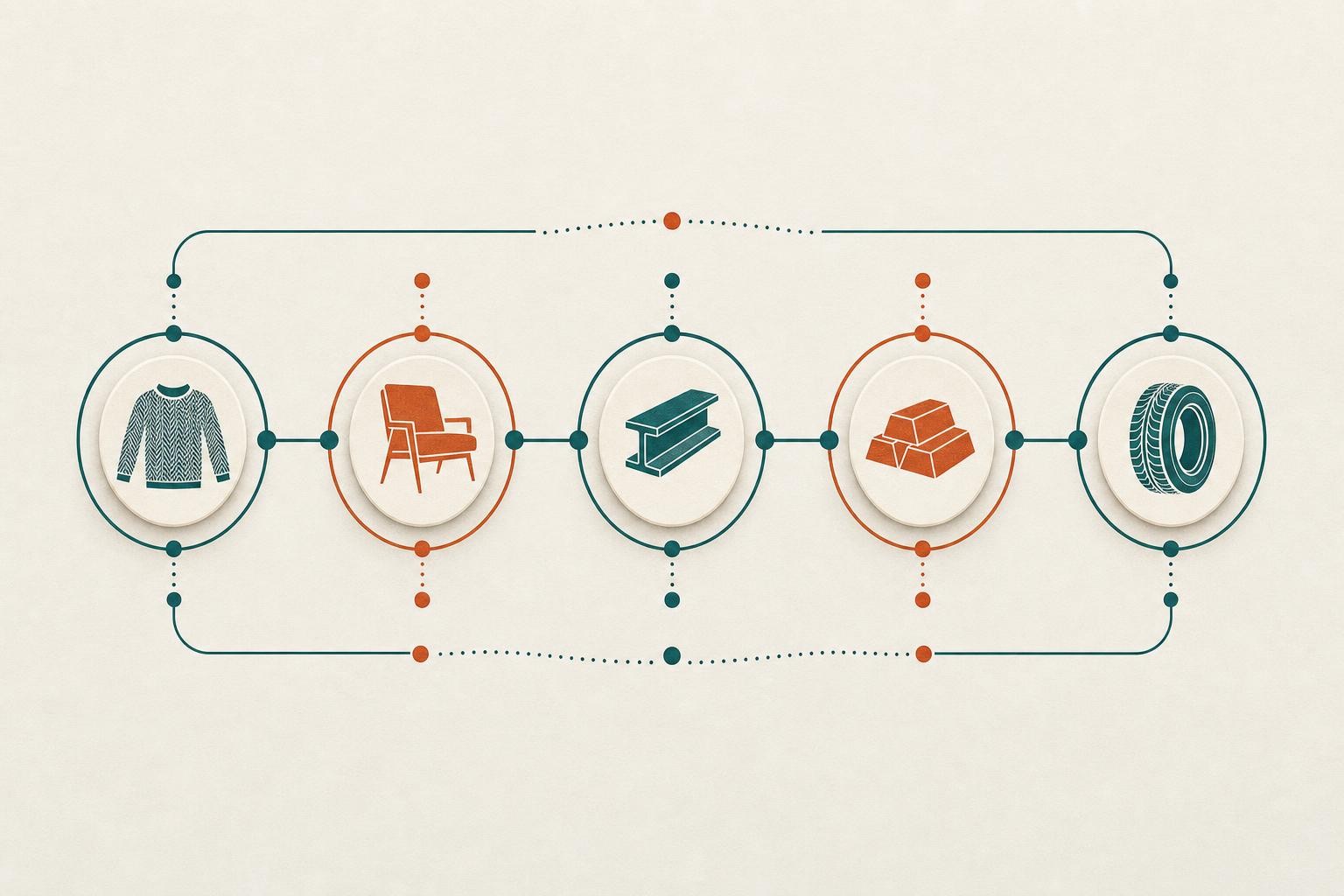
The European Commission has set out, sector by sector, which products it will regulate first under the Ecodesign for Sustainable Products Regulation (ESPR). That roadmap is the 2025-2030 ESPR Working Plan, adopted on 16 April 2025. If you make or import physical products, it is the single most useful document for working out when the rules - including a Digital Product Passport - are likely to reach your category.
TL;DR
- The first ESPR Working Plan (COM(2025) 187) prioritises textiles (especially apparel), furniture, mattresses, tyres, iron & steel and aluminium, plus horizontal measures on repairability and recycled content.
- The dates in the plan are indicative. The binding rules for each product group arrive later, through a delegated act that is not yet adopted.
- Only two near-term dates are actually fixed in law: the EU Battery Passport (18 February 2027) and the ban on destroying unsold textiles and footwear for large companies (19 July 2026).
- Use the plan to sequence your preparation - not as a compliance deadline.
What the Working Plan is (and isn't)
ESPR is a framework law. The regulation itself - Regulation (EU) 2024/1781, in force since 18 July 2024 - sets out the toolbox: the kinds of requirements the Commission can impose (durability, reparability, recycled content, substances of concern, carbon and environmental footprint) and the architecture of the Digital Product Passport. It does not set the actual rules for any specific product. Those come later, one product group at a time, through delegated acts.
The Working Plan is the Commission's published schedule for writing those delegated acts. It tells you the order of play and a rough timing - but a date in the plan is a planning assumption, not a legal obligation. See the European Commission's announcement of the 2025-2030 Working Plan.
The priority product groups
The first Working Plan prioritises:
- Textiles, especially apparel - widely expected to host the first large consumer Digital Product Passport.
- Furniture
- Mattresses
- Tyres
- Iron & steel
- Aluminium
Alongside these, the plan flags horizontal measures that cut across categories - notably a repairability scoring framework and recycled-content requirements (with electronics in focus).
The indicative sequence (read this as "expected", not "fixed")
Based on the Working Plan, the commonly cited order is:
- Iron & steel - delegated act expected first, around 2026.
- Textiles, tyres, aluminium - expected around 2027.
- Furniture and mattresses - later in the 2025-2030 window.
A Digital Product Passport typically applies some time after its delegated act is adopted, so a mandatory textiles DPP is realistically around 2028. Every one of these dates is indicative and can move. We track the live picture, confirmed versus expected, on the ESPR & DPP timeline.
The two dates that really are fixed
Two near-term dates are set in law and worth planning hard around:
- 18 February 2027 - the EU Battery Passport becomes mandatory for EV, light-means-of-transport and industrial batteries over 2 kWh, under the separate EU Battery Regulation. It is the first live Digital Product Passport and the working template for the rest.
- 19 July 2026 - large companies may no longer destroy unsold textiles, clothing accessories and footwear, under new EU rules.
What to do now
You do not need to wait for your delegated act to make progress:
- Confirm whether ESPR will reach your product, and roughly when. The scope & timing checker gives you a quick steer.
- Read your product group's page for the specifics we have so far - start with ESPR by product group.
- Start gathering the data a DPP will need - identifiers, composition, recycled content and footprint figures - most of which sit with suppliers and take time to collect.
- Separate "do now" from "wait". Our free DPP Readiness Checklist splits exactly that, so you prepare without over-investing in rules that are not final.
FAQ
Is the ESPR Working Plan legally binding? No. It is the Commission's roadmap for adopting delegated acts. The binding rules for a product group only take effect once that group's delegated act is adopted and applies.
When will textiles need a Digital Product Passport? The textiles delegated act is expected around 2027, with a mandatory DPP realistically around 2028 - but these dates are indicative and not yet fixed in law.
Which products are first? Iron & steel is expected to get the first delegated act (around 2026), followed by textiles, tyres and aluminium (around 2027).
Want the plan in plain English as it moves? Subscribe to The ESPR Brief - we watch Brussels' delegated acts so you don't have to.
Related reading

What Happens to the Digital Product Passport After the First Sale? ESPR and the Second-Hand Market
ESPR's Digital Product Passport is written around the moment a product is placed on the market. But the passport is meant to last a product's whole life. Here's who carries it into resale, what refurbishers and remanufacturers must actually do, and where the obligations genuinely stop.

Your Ecodesign Implementing Regulation Didn't Lapse on 18 July 2024: The ErP-to-ESPR Migration Map
ESPR repealed Directive 2009/125/EC, but your ErP implementing regulations are still binding. Here's the transition map: what the 2026 and 2030 dates actually close, what migration adds, and what to do now.

SCIP Database and ESPR: Why Your DPP Substance Data Is a Different Beast Entirely
You've been filing SCIP notifications since 2021. ESPR's Digital Product Passport doesn't replace that obligation - it demands something structurally different. Here's what changes and what to do now.