ESPR and Mattresses: What the 2029 Delegated Act Will Likely Require
Of the six priority product groups in the first ESPR Working Plan, mattresses get the least attention - no dedicated compliance guides, no vendor buyer's guides, barely a mention in most ESPR overviews. That's partly because their delegated act is the furthest out on the calendar. It's also the product group where the underlying circularity problem is arguably hardest: a mattress is a bonded, multi-layer object that was never designed to come apart.
Why mattresses have their own delegated act, separate from furniture
It would have been simple for the Commission to fold mattresses into the furniture delegated act - they're sold through similar retail channels and often regulated together in other contexts. It didn't. The ESPR Working Plan 2025-2030 treats mattresses as a distinct final-product measure, with furniture's delegated act indicatively adopted in 2028 and mattresses following in 2029, roughly a year later, with compliance expected around 2031.
The separation reflects a real technical difference: furniture is often mechanically fastened and can, in principle, be disassembled with hand tools. A mattress is typically a bonded composite - foam, textile ticking, adhesives, sometimes coil pocket springs, sometimes not - manufactured as close to a single fused object as the category allows. That construction, chosen for comfort and durability, is close to the opposite of what circular-economy disassembly wants.
What the preparatory work is already pointing to
Mattresses are currently in the preparatory study phase, the stage where the Commission and its contractors gather the technical evidence that will eventually become the delegated act's actual requirements. Based on the direction of that preparatory work, the areas most likely to end up regulated are:
- A layer-by-layer bill of materials. Not just "contains polyurethane foam," but a materials breakdown by component and layer - foam type, textile composition, adhesive chemistry, coating specification - the kind of granularity that lets a recycler or auditor actually verify what's in the product rather than take a label's word for it.
- Durability and fire-safety evidence. Mattresses sit at the intersection of two regulatory pressures that don't always pull the same direction: longer service life and recycled content on one side, fire-retardant treatment requirements on the other. Expect the delegated act to require documented evidence for both, not a simple pass/fail claim.
- Recycled content and end-of-life routes, with methodology. Not just a recycled-content percentage, but the supporting methodology behind it, plus documented end-of-life pathways - who takes the mattress back, what it becomes, and how that's verified.
- Replaceable parts and disassembly sequencing. This is the structurally hard one. If regulators want mattresses to be more repairable or more recyclable at end of life, the delegated act will need to specify which components must be replaceable or separable, and in what order a mattress can realistically be taken apart - information that barely exists in the industry today because it was never a design constraint.
None of this is confirmed text - it's the direction the preparatory evidence points, and it can still change materially before adoption.
The timeline, and why 2029 is not the date that matters most
- Indicative delegated act adoption: 2029
- Estimated compliance date: around 2031
The gap between those two dates matters as much as either one individually. As with every other ESPR delegated act, adoption in 2029 would set the rules; it would not be the date a Digital Product Passport for mattresses has to exist on a real product. Manufacturers get a compliance runway after adoption - typically one to two years for other product groups - and the actual DPP go-live date will be fixed in the adopted act itself, not assumed from the Working Plan's indicative year. Treat 2029 as "watch closely," not "comply by."
What mattress manufacturers should actually do in 2026
With five years of runway before adoption and roughly six before compliance, there's a real temptation to treat this as someone else's problem for now. Three things are worth starting regardless:
- Start the bill-of-materials work now, independent of the delegated act. Whatever the final data fields turn out to be, a layer-by-layer material and adhesive record is going to be asked for in some form. Building that traceability into your supply chain today - which foam supplier, which adhesive, which textile mill, for which SKU - is cheaper as a gradual process than as a compliance sprint in 2030.
- Watch the furniture delegated act closely when it lands in 2028. Mattresses were split out as their own measure, but furniture's adopted act will be the first real signal of how the Commission is actually writing requirements for bonded, multi-material bedroom and living-room products - disassembly language, recycled-content methodology, and DPP data architecture are all likely to carry over structurally even where the specific thresholds differ.
- Treat fire safety and circularity as a joint design problem, not two separate compliance tracks. The products that will struggle most under a future delegated act are the ones where flame-retardant treatment and recyclability were solved independently, by different teams, at different points in the product's history. Sourcing and R&D decisions made now about foam chemistry and adhesives will still be live on products sold in 2031.
Mattresses are the ESPR product group with the most preparatory runway left and, arguably, the hardest underlying physics problem to solve. That combination makes them easy to deprioritise today. It's also exactly why the manufacturers who start the materials-traceability work early will have a real head start when the preparatory study becomes a proposed text.
Related reading
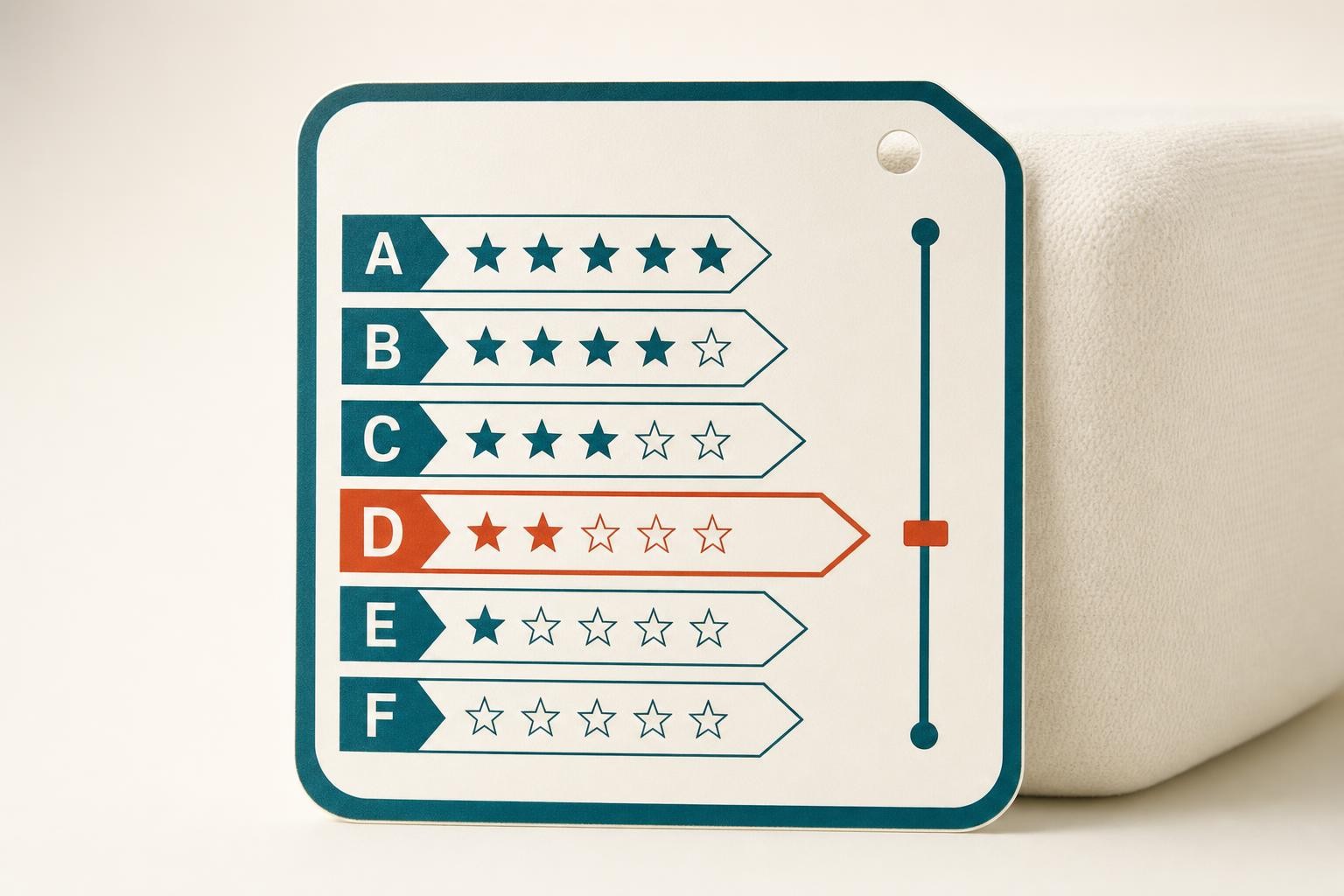
ESPR Performance Classes: The Ranking System That Makes Compliance Irrelevant to Competitiveness
ESPR's classes of performance rank compliant products against each other. A product can be fully lawful and still be publicly graded near the bottom of its category. Here's what that means for your product roadmap.
Who Sees What in a Digital Product Passport: Access Rights, Customs and Confidential Business Data
A passport is not a public web page. ESPR gives consumers, repairers, recyclers, authorities and customs different views of the data. Here is how role-based access works, what the pending security standards add, and how to protect trade secrets.
The ESPR Textiles Delegated Act: What the Draft Is Expected to Require from Apparel Brands
The textiles delegated act is the next big ESPR measure for fashion. Here is what the JRC preparatory work points to on durability, recyclability of mixed fibres and data points, the likely timeline, and how brands should prepare now.